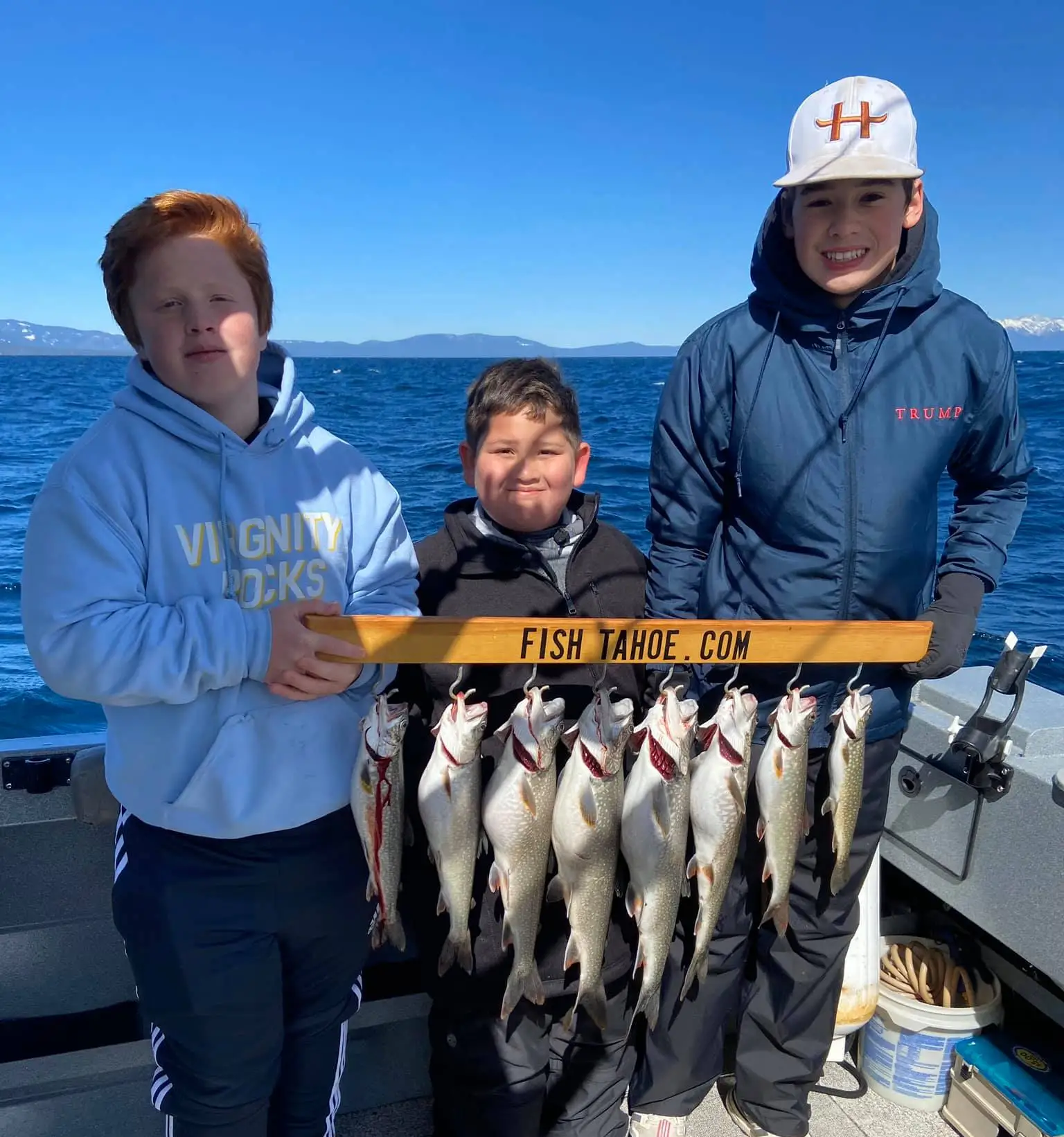
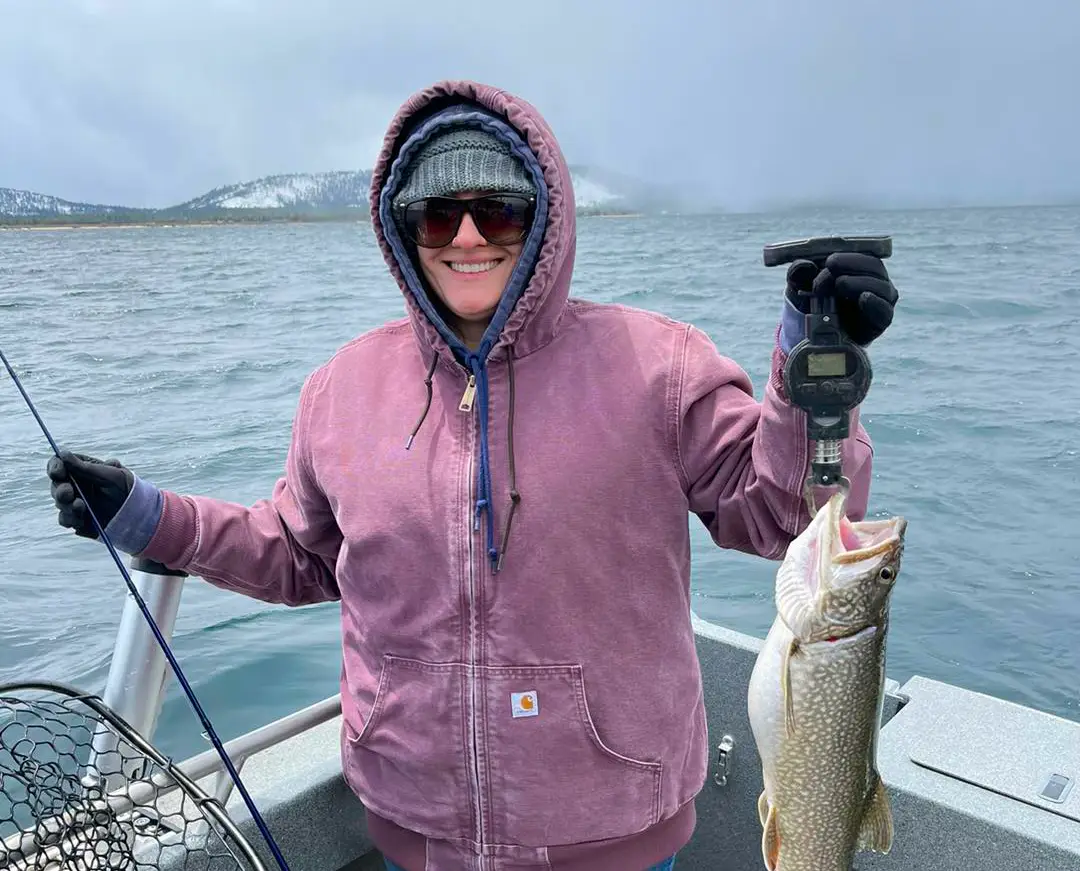
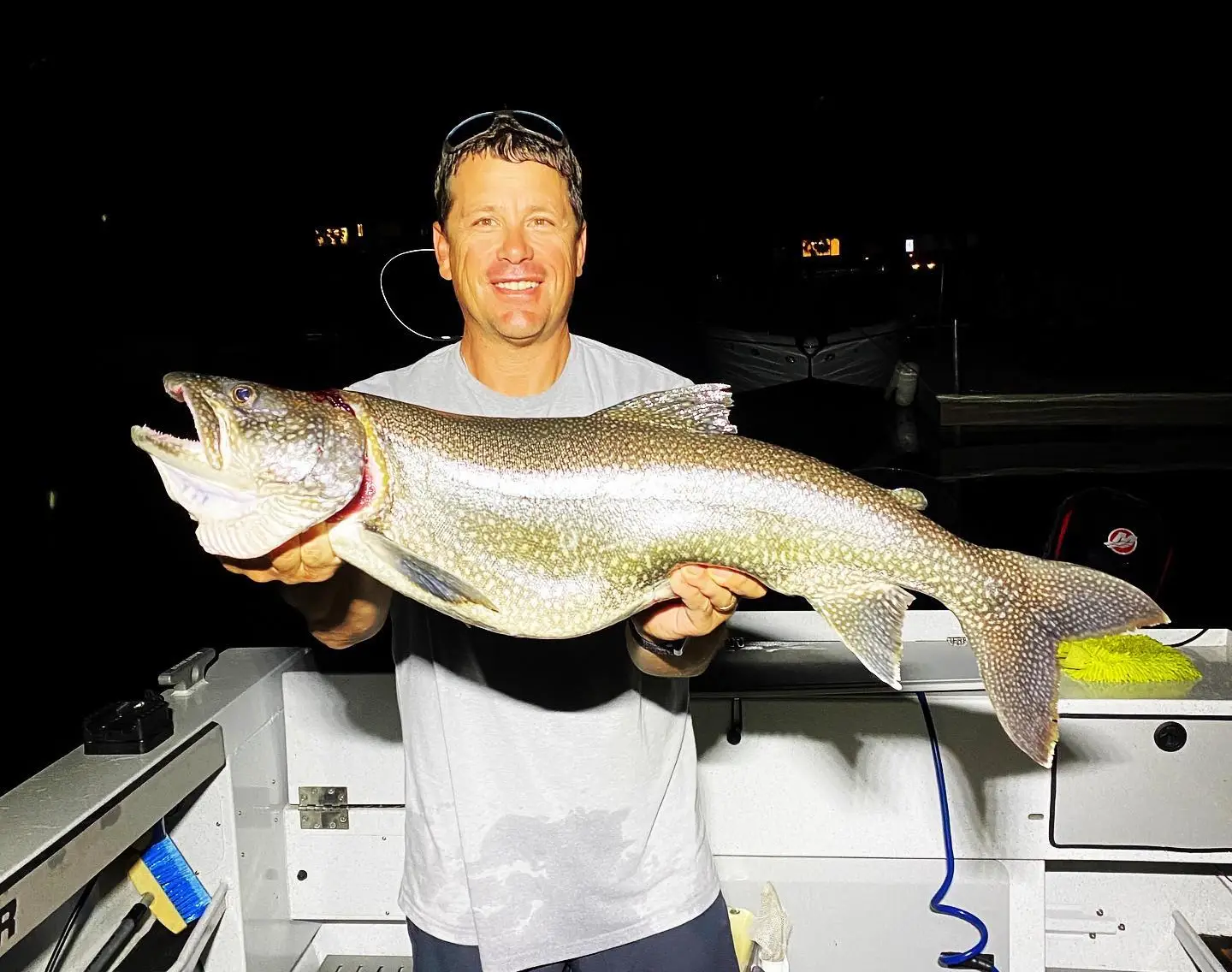
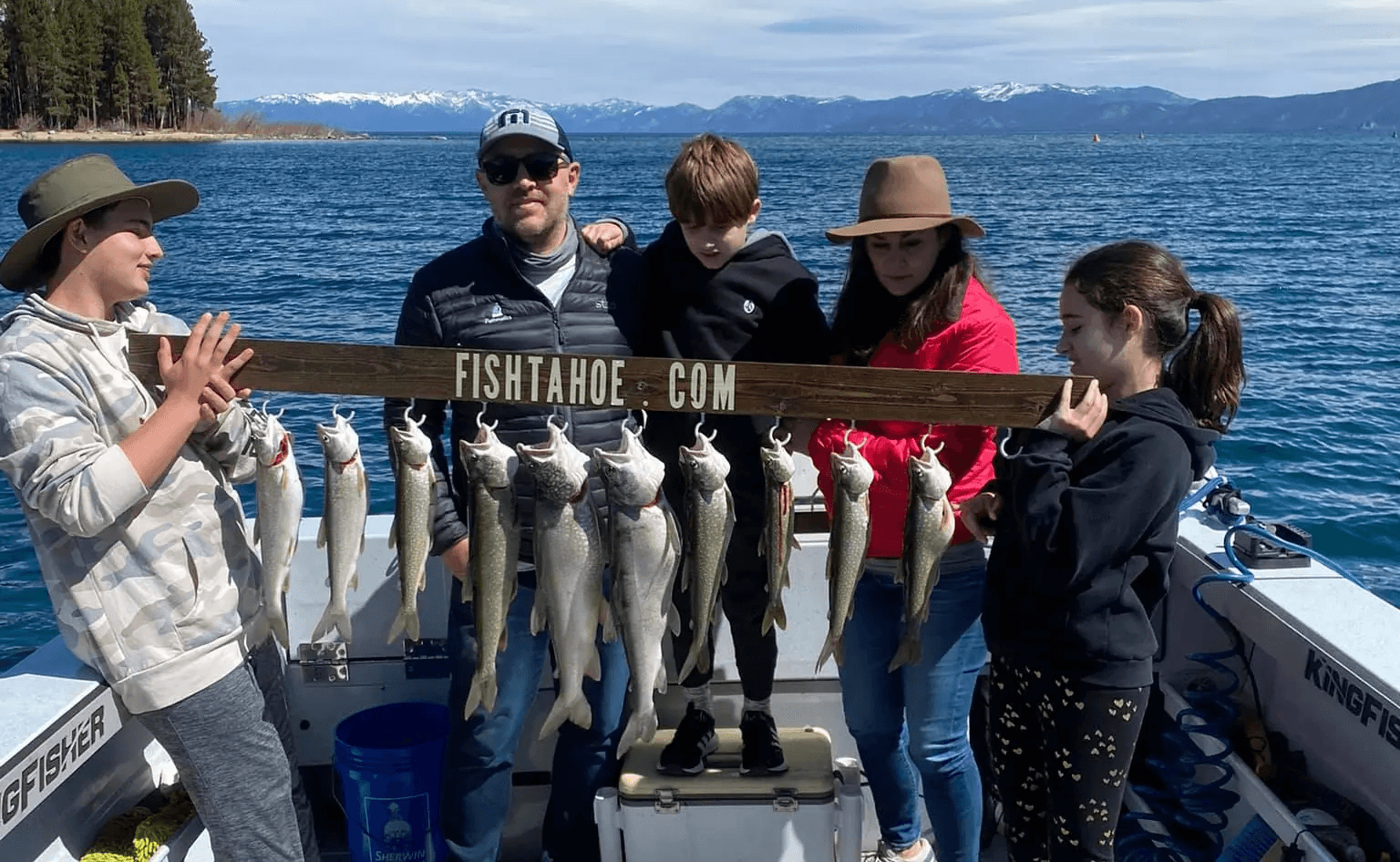
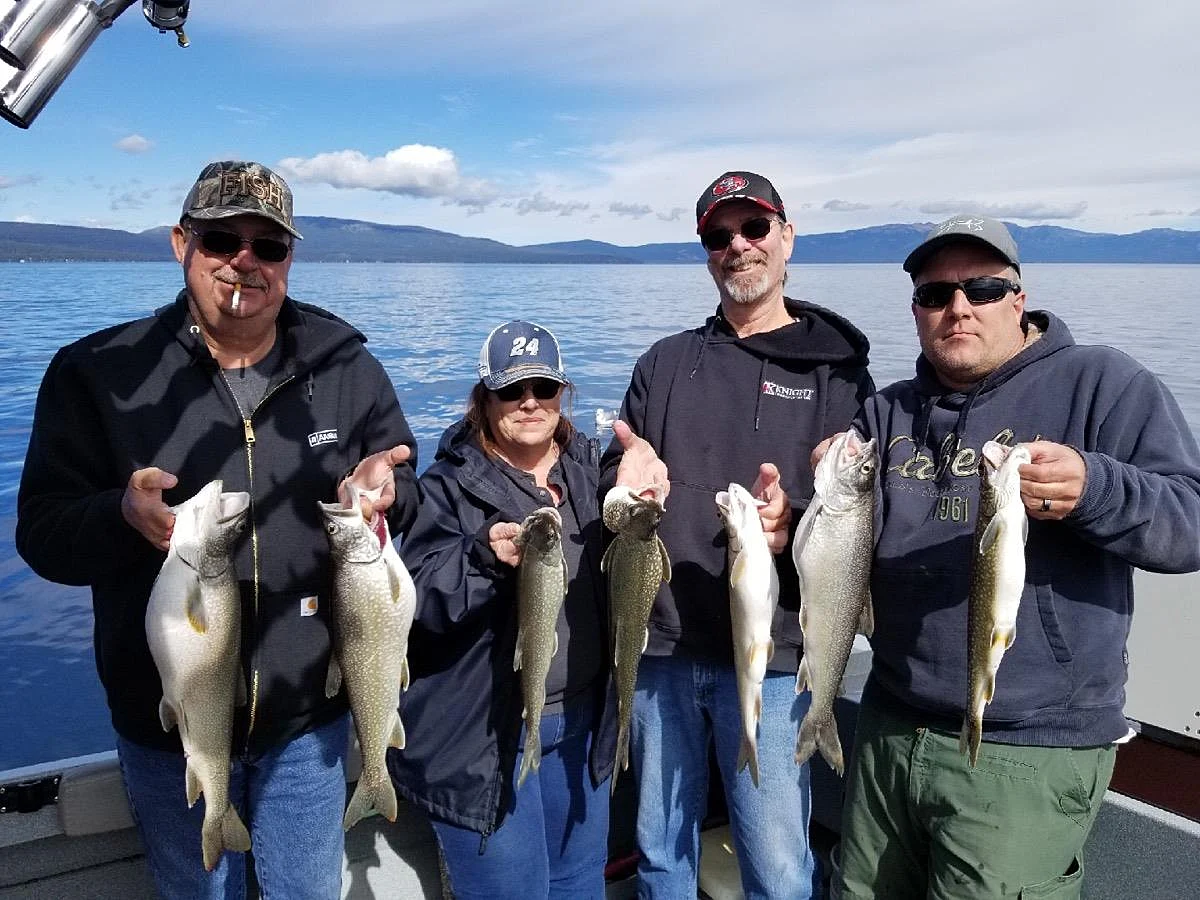
March Mackinaw Fishing on Lake Tahoe
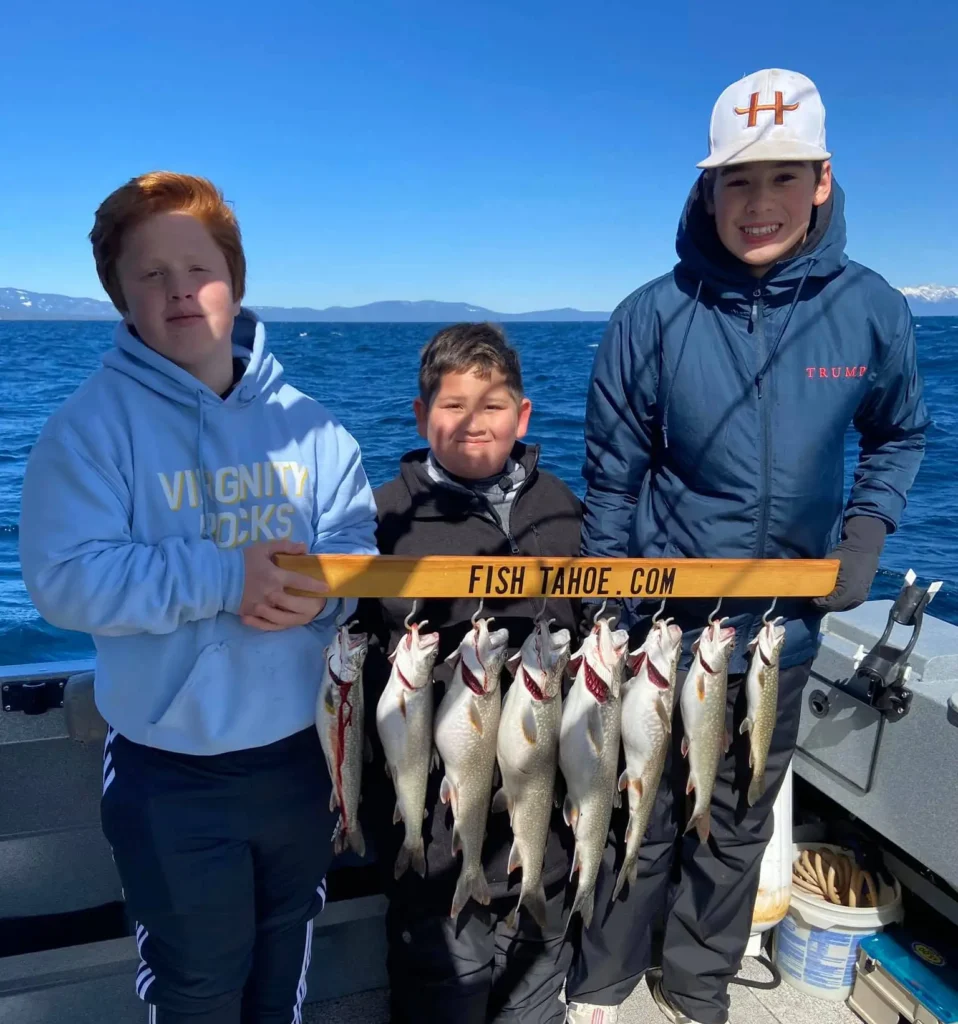
What Anglers Can Expect in Early Spring
March is one of the more consistent months we see for targeting Mackinaw on Lake Tahoe. At Mile High Fishing Charters in South Lake Tahoe, we fish for Mackinaw year-round, and March tends to reward anglers who are specifically after these fish. Cold water holds stable, the fish are active, and the lake is quiet. If you’re asking whether March is a good time to fish Lake Tahoe for Mackinaw, the honest answer is yes, provided you come prepared for late-winter conditions and understand what kind of fishing you’re signing up for.
What Is a Mackinaw?
Mackinaw, also called Lake Trout, are not trout in the way most people think of trout. They belong to the char family, which puts them closer to Arctic char and brook trout than to rainbow or brown trout. That distinction matters when you understand how they live.
Mackinaw are built for deep, cold, dark water. They don’t hold in riffles or hug a bank. They live in the deepest parts of large lakes, following baitfish through open water and along underwater structure. A Mackinaw holding 200 feet down on a rocky shelf behaves differently from a brown trout rising to a hatch, and the entire approach to finding and presenting to them is different.
Lake Tahoe suits them as well as any water in the West. The lake is over 1,600 feet deep in places, stays cold year-round, and holds the kind of stable, oxygen-rich environment these fish need to grow large and live long. Mackinaw in Tahoe have time and space to reach real size. Fish in the 10 to 20-pound range are a regular part of the season, and larger fish show up every year.
Because they spend their lives so deep, Mackinaw require more effort to locate and target than most freshwater species. That’s part of what defines fishing for them.
Why Mackinaw Are a Prized Catch
The size is part of it, but not most of it.
What makes Mackinaw appealing to serious anglers is the whole process of hunting a deep-water predator. These fish don’t give themselves away. They don’t rise, they don’t stack in obvious current seams, and they don’t follow predictable surface behavior. Locating them requires reading structure, understanding how baitfish move through the water column, and putting gear down to depth with some precision. When you do everything right and still come up empty, that’s part of the deal.
When you do connect, a Mackinaw in the 15-pound range pulling hard from 200 feet of water earns every bit of the effort it took to find it.
For anglers who fish Tahoe specifically in March, there’s another layer: this is not peak season, and it’s not a casual tourist trip. The people who come out in March are usually here because they want Mackinaw. They’re willing to deal with cold mornings and variable weather in exchange for good fishing without summer crowds, and they tend to know what they’re looking for.
Why Mackinaw Fishing Can Be Good in March
The simple reason is water temperature. Mackinaw are most active when the water is cold, and in March, Tahoe’s water is cold. Surface temperatures are typically still in the upper 30s to low 40s, and the deep structure where these fish spend their time hasn’t changed much since January.
That stability matters. In warmer months, as the lake transitions through seasonal changes, Mackinaw can scatter and become harder to locate consistently. In March, they’re still following their late-winter patterns, holding on structure, staying close to bottom in deeper zones, predictable in the way cold-water fish tend to be when conditions haven’t pushed them around yet.
The flip side of March is that conditions can still be genuinely wintry. This is not the soft shoulder of spring. We’ve had March mornings on Tahoe where it looks and feels like February: frost on the boat, a hard wind building by mid-morning, and the snowline sitting low on the mountains around the lake. The calendar says spring is coming, but the lake doesn’t always agree. That’s actually fine for the fishing. The cold keeps Mackinaw on their winter schedule, which makes them easier to pattern.
Typical Depths for March Mackinaw
In March, Mackinaw are generally holding deeper in the water column compared to what you’d see during summer, when they sometimes suspend higher and range more widely.
We typically find fish in March along:
- Deep structure on the lake's rocky shelves and drop-offs
- Bottom zones in deeper basins where baitfish concentrate
- Transition areas where the bottom steps from moderate depth into much deeper water
The exact depth varies with recent weather and where bait is stacked, but the tendency toward deeper structure holds throughout the month. Anglers should expect to work deeper water and be prepared to spend time dialing in the zone before finding fish.
Weather Conditions on Lake Tahoe in March
Lake Tahoe sits at roughly 6,225 feet above sea level, and at that elevation, March weather still belongs mostly to winter. The Sierra Nevada hasn’t finished its storm cycle, and late-season systems regularly move through, bringing wind, snow, and rapidly changing conditions on the water.
Typical March conditions include:
- Morning temperatures in the 20s to low 30s at the lake surface
- Afternoons that can climb into the mid-40s to low 50s between fronts
- Late-season snowstorms that can arrive with little warning
- Wind that builds quickly when storm systems push through the range
The best fishing days in March tend to fall in the calm stretches between weather systems: mornings where the lake sits flat, the air is cold and still, and you can hear everything. Those windows can be short, which is why checking the forecast the night before matters more in March than in July.
On days when a front is moving through, conditions on the open water can deteriorate quickly. We pay close attention to wind forecasts before every trip this time of year.
What to Wear for March Mackinaw Fishing
Cold air, possible wind, and time spent on open water at altitude adds up fast. Layering is the only practical approach.
- Morning temperatures in the 20s to low 30s at the lake surface
- Mid layer: Fleece or wool for insulation. Temperatures can vary 15 to 20 degrees between a cold morning and a sunny afternoon, so something you can add or remove easily is worth having.
- Outer layer: A waterproof, windproof shell. Wind on the open lake in March is the fastest way to get cold. Waterproof bib pants help on longer days or when spray is a factor.
Gloves and a warm hat are not optional in March. Hands that are too cold to manage gear make for a long day.
Why Many Anglers Like Fishing in March
Summer on Tahoe is busy. Boat traffic picks up, the lake fills with recreational users, and the calm early mornings that define good Mackinaw fishing get harder to find.
March is different. The lake is quiet. The roads into South Lake Tahoe are manageable. There are no jet skis. The snow on the mountains around the lake is still deep, and on a calm morning the whole place feels like a different world from what July looks like.
For anglers who specifically want Mackinaw, not a casual warm-weather outing but real cold-water fishing with a serious target species, March holds up well. The fish are where you expect them to be, the conditions haven’t pushed them into summer scatter mode, and the experience on the water has a quality that the busy season can’t match.
Final Thoughts
March sits at the tail end of winter on Lake Tahoe. The water is still cold, the Mackinaw are still following winter patterns, and the lake hasn’t transitioned into the busier rhythms of late spring and summer.
For anglers who want to target one of Tahoe’s most challenging and rewarding fish during a season when the conditions actually favor them, March is worth serious consideration. Come prepared for cold mornings, build in flexibility for weather, and understand that you’re fishing for a deep-water predator that demands patience. The fishing can be very good, but it earns that.
March is one of the stronger months for Mackinaw on Tahoe. If you want to be on the water, you can book aLake Tahoe fishing charters directly through our site.