What to Wear on a Winter Fishing Charter on Lake Tahoe
We run winter fishing on Lake Tahoe year-round at Mile High Fishing Charters, based out of South Lake Tahoe. That includes our Mackinaw trips, which are some of the most productive fishing we do all year. One question we get consistently from winter clients is what to wear. It’s a fair question. Lake Tahoe in winter is not the same as fishing in a bay or on a river. The elevation, the open water, and the wind off the lake create conditions that will expose every weak point in what you’ve got on. This article covers what actually works on our boat in those conditions.
Understanding Winter Conditions on Lake Tahoe
Lake Tahoe sits at 6,225 feet. That elevation changes how cold feels. Air temperatures in winter can run anywhere from the teens to the low 40s on the water. Wind is the bigger issue. When it comes across the open lake, there’s nothing stopping it, and it cuts through clothing that would be fine at sea level. We also deal with spray. Not constant, but enough that anything absorbing moisture is going to be a problem within the first hour.
We fish through it. You need to be dressed to fish through it, not just ride out and then be too cold to handle a rod.
Base Layers That Actually Work
The base layer is the one most people get wrong. They show up in cotton — a cotton undershirt, cotton long johns, sometimes both. Cotton holds moisture against your skin and stops insulating once it’s damp. On a two- to four-hour winter charter, that’s a problem.
What works:
- Merino wool base layers: top and bottom. They regulate temperature, manage moisture, and don’t hold odor after a full day on the water.
- Synthetic moisture-wicking base layers: a reliable second option if you don’t have merino. Look for polyester or polypropylene.
- Fitted, not loose:base layers that bunch or gap at the waist lose their function fast when you’re bending and moving on the boat.
Skip the cotton entirely. That includes cotton thermal sets, which feel warm in the store and don’t perform on the water.
Outerwear That Handles Tahoe Wind
The middle and outer layers are where most people need to spend their attention.
For the mid layer:
- Fleece jacket or wool sweater — something that insulates even if it picks up a little moisture.
- Down can work in very dry conditions, but once it gets wet it loses insulation quickly. On an open lake in winter, that’s a risk.
For the outer layer:
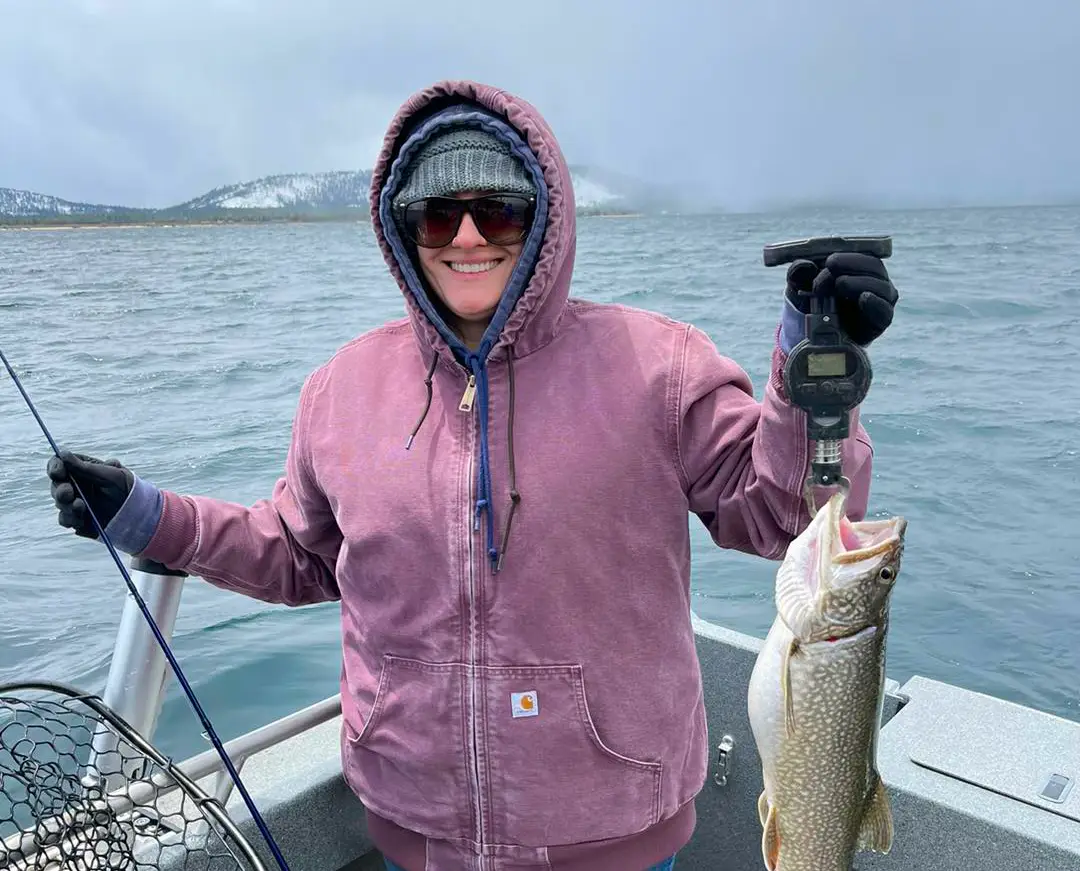
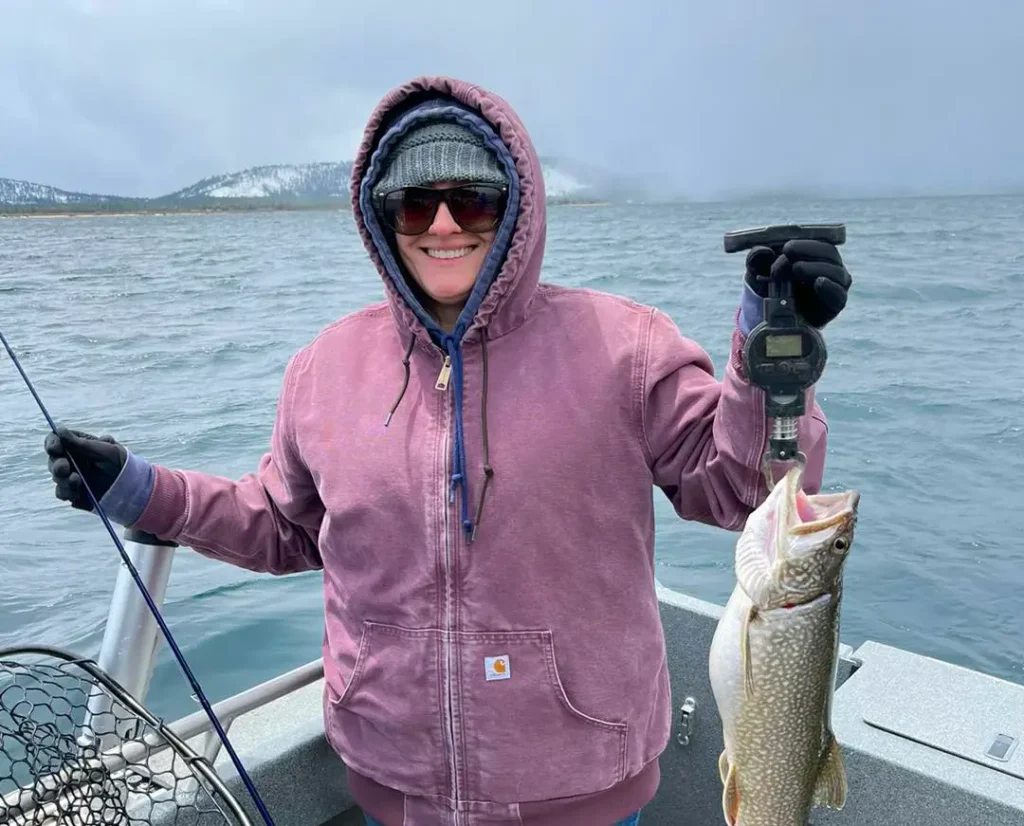
- Waterproof and windproof shell — this is non-negotiable. It doesn’t have to be a fishing-specific jacket, but it needs sealed seams and a solid hood.
- Bib overalls or waterproof pants — we recommend bibs over regular pants. They cover your lower back and core when you’re leaning over the gunwale, and they stay in place when you’re fighting a fish.
- Avoid relying on ski jackets unless you’ve confirmed they are fully waterproof and windproof. Many are designed for snow, not open-water spray and sustained wind.
Hands, Feet, and Head Protection
Hands:
Your hands are going to be your most immediate issue. You’re handling rods, managing line, and working with terminal tackle. We don’t recommend heavy insulated gloves because the dexterity loss makes it hard to fish.
What works:
- Thin liner gloves under a waterproof outer glove or mitten you can pull off when you need your fingers.
- Neoprene fishing gloves in the 2mm–3mm range — they stay functional and block wind and water.
- Hand warmers in your pockets as backup — not as the primary plan.
Feet:
Cold feet end trips early. The boat deck transfers cold quickly.
- Wool socks, at least mid-weight — two pairs if you run cold.
- Waterproof insulated boots rated below freezing — pac boots or insulated waterproof hiking boots both work.
- Avoid lightweight casual footwear or uninsulated boots — they won’t hold up past the first hour.
HEAD:
You lose heat from your head and neck. A fleece or wool beanie that covers your ears is the baseline. A neck gaiter adds significant warmth without bulk. If it’s windy, the hood on your outer shell over the beanie completes the setup.
What Not to Wear
We see the same mistakes regularly. Here’s the short list:
- Cotton anything — base layers, hoodies, jeans. Leave it at home.
- Denim — heavy, absorbs moisture, and slow to dry.
- Fashion outerwear — if it’s not waterproof and windproof, it’s not suited for this trip.
- Lightweight casual footwear — not appropriate for winter deck conditions.
- One thick layer instead of multiple thinner layers — a single heavy coat doesn’t adapt. Layers do.
What Not to Wear
Check the forecast the night before and the morning of your trip. Temperatures on the lake can shift quickly. If the forecast drops, add a layer. If it comes up warmer, you can always take something off and stow it in the cabin.
Bring a dry bag or an extra set of clothes for after. If you’re wet at the end of a trip, dry clothes at the dock make a difference.
We’ll have coffee and hot drinks on the boat. That helps, but it doesn’t replace proper gear.
If you’re booking a winter Mackinaw charter with us and have questions about what you have versus what you need, reach out before your trip date. We’d rather answer that question ahead of time than have you standing on the dock underdressed. Call us to book or to ask questions — we guide year-round and are happy to talk through what the conditions look like for your specific date.